

The contest is CLOSED !
Contest Sponsored By:
 |
 |
 |
|
|
Call for Participation
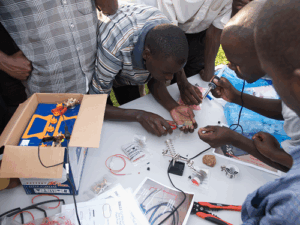
Light, like water and food, is a basic human necessity
Around 940 million people globally do not have access to electricity they can rely on for electric light, leaving them reliant on polluting light-sources or without adequate light after dark. It is time to end light poverty! Join us to create affordable, reliable, clean light around the world.
We can end light poverty! We seek inventors and entrepreneurs to design for extreme affordability.
Motivation for the Competition
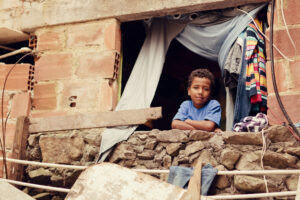
Light offers income and learning opportunities in rural settings, reducing intergenerational poverty and population migrations. For those living with extreme poverty, current solar-powered lamps have proven low quality, or economically inaccessible, and/or dependent on free distribution.
Can you bring light to some of the 940 million people without reliable access to electricity? Join Let’s make light and share your innovative design, business, and distribution ideas for sustainable and extremely affordable light sources.
Who can apply?
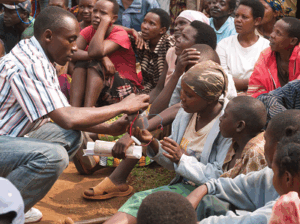
The competition is open to any individual (18 years old or older), or organization anywhere in the world.
Overview: Competition Tracks and Expectations

Participants can enter projects in three different tracks, each focusing on different aspects of solving the light poverty challenge:
- Environmentally Sustainable Technology;
- Sustainably Local Business;
- Self-Sustaining Market Expansion.
When submitting your project, you can elect to enter the contest in up to two tracks (a primary and a secondary). Entries will be evaluated according to criteria defined for these chosen tracks only.
Winning proposals will be invited to further develop their projects in Phase 2 of the competition. You should already in this first phase consider the next level of your lighting product, business model or market support if invited to participate in Phase 2.
Mind Maps for each Competition Track
This competition is challenging you and your team to develop lighting technologies, business models or market support mechanisms. Not only should the solutions be sustainable, the solutions should also be very cost efficient making them affordable for end users with very limited incomes. To get you started and support you, we have constructed a mindmap for each track that can give inspiration on aspects to consider when preparing you proposal. If you have constructed a mind map on your own, please include it in your submission!
Open the mind maps below for more details about each track:
- Let’s Make Light – Technology Considerations (PDF, 39 KB)
- Let’s Make Light – Business Considerations (PDF File, 38 KB)
- Let’s Make Light – Market Considerations (PDF, 44 KB)
- LML-Tracks (PDF, 25 KB)
Submission Requirement and Awards
For all tracks, entries should include all or most of the following:
- The design process: how did you approach the problem
- The design: solution description from start to finish, processes, procedures, flowcharts, drawings, schematics, mind maps, any visual representation of your description
- Analytical results: circuit simulation, manufacturing flowchart, distribution map, financial analysis, and anything that justifies and validates critical aspects of your proposed solution
- Demonstration of a direct connection and consultation with the communities to be served
Timeline
- “Save the Date” Announcements: Early 2023
- Website and Submission Page Open: 30 June 2023
- Extended Entry Deadline: 29 September 2023
- Winners were contacted on 8 November 2023. All other teams will receive feedback in the upcoming weeks.
- Prize Ceremony: TBA
Contest Rules
Official Contest Rules (PDF, 180 KB)
Frequently Asked Questions
-
What are the scoring criteria: Please make sure that you read all the information posted on this page, then consider the following questions, depending on which track you will be applying to. You do not have to reach all goals, but the more goals you are able to achieve in your category of choice, the higher your project will be rated.
- How sustainable is the product or service you have in mind?
- Are you minimizing the use of materials in your manufacturing process?
- Are you minimizing transportation distances for source materials or the finished product?
- Can the product be manufactured locally, reducing further transport as much as possible?
- Can your light source be locally repaired?
- Can the manufacturing process and facility be easily replicated elsewhere?
- Is your solution energy efficient?
- Can the light source materials be recycled, leading to a circular economy?
- Does the business model you are proposing support product sustainability or a sustainable market?
- Are you sufficiently describing your end-user payment processes?
- Can I submit a project about energy sources for lighting: While novel forms of affordable energy sources can be critical to bringing light to remove areas of the globe, and can be included in your project design, for this competition, your project must include a light source.
- Can my organization submit more than one project: Yes. According to the contest rules (see the downloadable PDF file posted on this page), an organization can submit up to three projects per contest category, but teams for each project must be different. An individual can be included in more than one team.
-
Who retains intellectual property rights for submitted projects: You must sign a copyrights form to submit your project (see Step-2 instructions), which will only be retained if you win a prize. Otherwise, it will be returned to you.
- I am concerned about sharing confidential information. How will my proposal be shared: Your documents will be confidential and accessible by the judges only, for grading purposes.
- Is there a specific income level or product cost limit for the beneficiaries of the contest? The desired goal of the competition is a light source accessible to, and affordable by anyone, anywhere. The proposals should benefit local end-users with the lowest income levels. No specific income level of product cost are defined for the competition.
- What is meant by “local” manufacturing? The goal is to promote local manufacture where sensible. By “local”, we mean as close as possible to the point of end use—within country or a region of neighboring countries, reducing the carbon contribution from the import of pre-assembled components. The development of national and regional manufacturing facilities increases local employment, building capacity and knowledge for the design and production of goods that match local needs.
-
I have another question not addressed here. How do I contact you: Please email your questions to Let’s Make Light Competition 2023.
Contact
Send your questions to Let’s Make Light Competition 2023
 |
|
 |
